

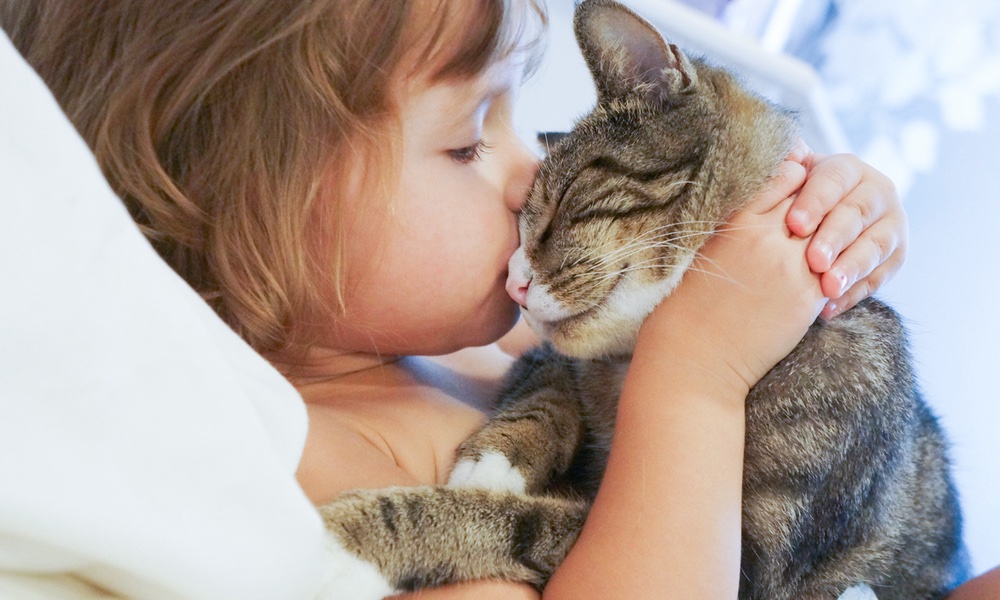


Parents of children diagnosed with asthma face a difficult question: Should they find a new home for the family cat to reduce their child's risk of breathing problems? A new study from Sweden offers some reassuring news. It found that children with asthma and allergies who lived with cats did not experience worse asthma symptoms, poorer lung function or more asthma attacks than similar children who did not live with cats. These findings suggest that having a cat in the home may not make asthma harder to manage.
The study involved a notably large group of over 30,000 Swedish children between the ages of 4 and 17 born between 2006 and 2020 who had been diagnosed with asthma or airway allergies. The group were tracked from 2023 through 2024.
To conduct their study, the investigators linked information from several national Swedish databases, including the National Patient Register, the Prescribed Drug Register and the National Airway Register. They also used Sweden's National Cat Register to determine whether children lived in households with cats. About 9.4 percent of the children lived with at least one cat.Children with asthma who were living with cats had outcomes that were virtually identical to those of asthmatic children who did not have cats at home.
Here's what they found: Children living with cats had asthma outcomes that were virtually identical to those of children who did not have cats at home.
Moderate-to-severe asthma occurred in 9.5 percent of cat-exposed children and 10.1 percent of children without cats. Asthma attacks occurred in 3.3 percent of children living with cats and 3.5 percent of those without cats. Lung function measurements also showed no meaningful differences between the two groups.
The number of cats in the household didn't matter either. Nor did the cat's age or sex appear to influence asthma outcomes. As Putri said in a press release, “Here we show in a nationwide cohort of children in Sweden with asthma and allergies, that children living with a cat had similar asthma severity, exacerbation, asthma control and function to children living without cats in the short term.”
There might be a reason cats have less impact than many people assume. According to Putri, children are exposed to cat allergens in many places besides their homes. “Children who do not have cats at home may still be exposed in shared environments such as schools or public transportation, which could explain why we didn't see a difference,” she said.
The findings do not mean every child with asthma will respond the same way to living with cats, the researchers note. In addition, the investigators did not know which specific allergens each child was sensitive to and, as a result, they could not determine whether children who were allergic to cats experienced different outcomes.Asthma attacks occurred in 3.3 percent of children living with cats and 3.5 percent of those without cats. The number of cats in the household didn't matter either.
Sweden's cat registry is relatively new, meaning some children living with cats may have been incorrectly classified as unexposed. The study also did not measure how much time cats spent indoors or how long children had been exposed to them.
The results won't settle every question about pets and asthma, but they do challenge standing assumptions and provide parents with new information to discuss with their child's healthcare provider.
The study is published in Frontiers in Allergy.