

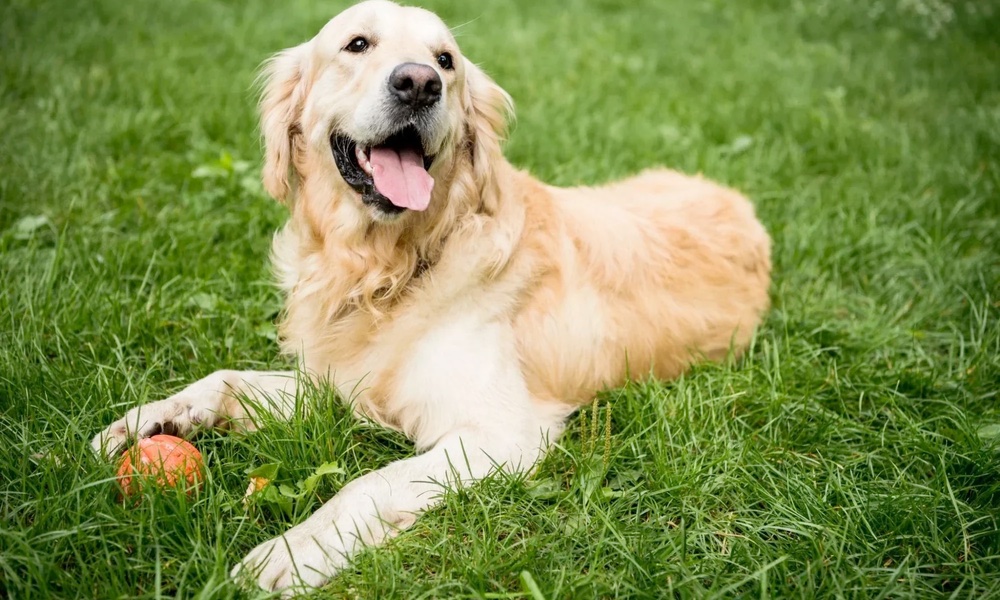


Dogs are beloved for the comfort and companionship they offer us. Among breeds of dogs, golden retrievers are celebrated for their steady and affectionate natures.
Yet beneath that soft fur lies a surprisingly complex emotional landscape. It's one that is more like ours than scientists previously understood.
Many of the genes shaping canine temperament also influence human personalities, emotional responses and mental health. A landmark study by researchers at the University of Cambridge in the United Kingdom found this commonality when they analyzed the genetic makeup of 1,300 golden retriever dogs.Purebred dogs have less genetic diversity than humans, making behavior-linked variants easier to spot.
The goldens' owners' responses resulted in 14 reliably measured behavioral traits. By pairing these scores with blood-derived genomic data, researchers could scan each dog's entire genome and identify genetic markers associated with specific behaviors.
What they discovered was unusually clear. Purebred dogs have less genetic diversity than humans, making behavior-linked variants easier to spot. Out of the regions they identified, several stood out; 12 matched genetic regions known to influence human traits such as anxiety, depression, intelligence and emotional sensitivity.
“The findings are striking — they provide strong evidence that humans and golden retrievers have shared genetic roots for their behaviour. The genes we identified frequently influence emotional states and behaviour in both species.”
For example, the gene PTPN1, associated with aggression toward other dogs in golden retrievers, is also linked to intelligence and depression in humans. Another variant that makes some goldens continue worrying after a stressful event is the same one that influences whether people “tend to worry too long after embarrassment.” In other words, if your golden frets for hours after a tense encounter at the dog park, they may be expressing a deeply ingrained emotional pattern, the kind humans share.
The findings can reshape the way owners interpret difficult behaviors, first author, Enoch Alex, a researcher in Cambridge's Department of Physiology, Development and Neuroscience, explained. “These results show that genetics govern behaviour, making some dogs predisposed to finding the world stressful. If their life experiences compound this they might act in ways we interpret as bad behaviour, when really, they're distressed.”A dog hiding from vacuum cleaners, buses or sudden sounds may carry a gene that in humans contributes to irritability and anxiety.
The researchers emphasize that genes do not dictate a specific behavior, but rather influence broader emotional tendencies including sensitivity, irritability, stress response and fearfulness. Experience then shapes how those tendencies appear in daily life. A golden retriever hiding from vacuum cleaners, buses or sudden sounds may carry a gene that in humans contributes to irritability and anxiety.
The implications are wide-ranging. Better training approaches could integrate emotional understanding, not just reward-based techniques. Veterinarians might treat severe fearfulness or chronic anxiety with the same seriousness, and in some cases, with the same medications used in human healthcare.
The study is published in PNAS, Proceedings of the National Academy of Sciences.