

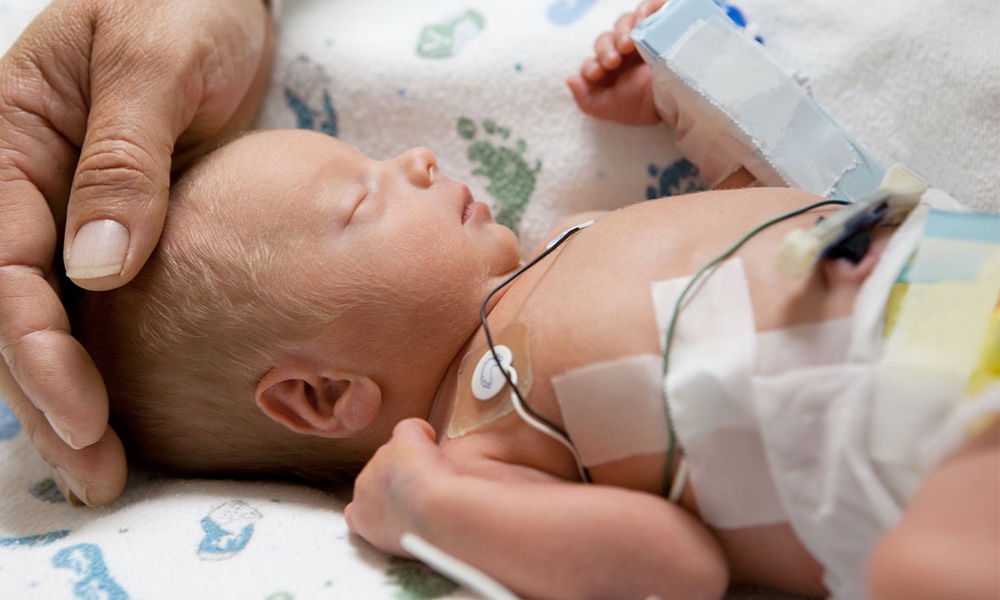


A mother-to-be's immune system must perform a delicate balancing act during pregnancy. It has to protect her from infection while allowing a developing fetus, which carries genetic material from both parents, to grow. In some pregnancies, antibodies produced by the mother may disrupt that subtle balance and contribute to premature birth, new research suggests.
The study examined blood samples from nearly 2,200 pregnant people across eight research cohorts in the United States, United Kingdom and Italy. The researchers compared pregnancies that ended before 37 weeks with those that reached at least 37 weeks, the standard definition of preterm birth. They also analyzed samples from 130 people who had never been pregnant.
The team scanned participants' blood for antibodies that recognize proteins in the human body using a technology called Phage Immunoprecipitation Sequencing, or PhIP-Seq.The maternal immune system may be one piece of the puzzle behind some premature deliveries.
To understand how pregnancy changes these immune responses, the researchers first studied women receiving fertility treatments who became pregnant after frozen embryo transfers.
Because the timing of conception could be closely tracked, the team could compare blood samples taken before pregnancy with samples collected afterward. They then applied their findings to the much larger set of pregnancy samples.
"We wanted to capture the immune system before pregnancy, and then measure what changed,” first author Elze Rackaityte, an assistant professor at the University of California, San Francisco, explained in a press release. The idea was to track immune changes over time. "This patient population was particularly well suited to answering that question, because the timing of pregnancy following a frozen embryo transfer could be closely tracked."The researchers found a broad pattern of antibody changes in pregnancies that ended prematurely. These differences could be detected well before delivery.
A model based on the antibody patterns showed a moderate ability to distinguish preterm from full-term deliveries in a separate validation analysis, though it is not yet a test ready for routine prenatal care.
One antibody drew particular attention because it targeted a protein called interleukin-1 receptor antagonist, or IL-1RA. The protein normally helps restrain inflammation by blocking a molecule, IL-1B, that can promote uterine contractions. Researchers suspect that when antibodies neutralize IL-1RA, this natural break may fail, allowing inflammation to rise and potentially contributing to early labor.
The team tested the possible mechanism in pregnant mice. After the animals received antibodies against IL-1RA, levels of IL-1B increased, and researchers observed placental damage. Examination of human placental tissue showed that IL-1RA is located at junctions between cells lining placental blood vessels, where the exchange of oxygen and nutrients between mother and fetus takes place.One antibody drew particular attention because it targeted a protein that normally helps restrain inflammation by blocking a molecule that can promote uterine contractions.
Preterm birth has many causes, and the researchers emphasize that the antibody was not found in every premature pregnancy. They also do not yet know whether the antibodies develop before pregnancy or emerge after conception. More research is needed to establish how reliably the immune signature predicts risk and which patients might benefit from screening.
The findings could eventually point toward new ways to identify and treat certain high-risk pregnancies. One possibility is Anakinra, a drug that mimics IL-1RA and has been used to treat inflammatory diseases such as rheumatoid arthritis. The researchers say its potential to prevent preterm birth deserves further study. But it is not an established treatment for this purpose, and pregnant patients should not use it for this reason outside medical guidance.
For now, the study offers evidence that the maternal immune system may be one piece of the puzzle behind some premature deliveries. If future research confirms the findings, antibody testing could one day help clinicians recognize risk earlier and explore more targeted approaches to prevention.
The study is published in Nature Immunology.