

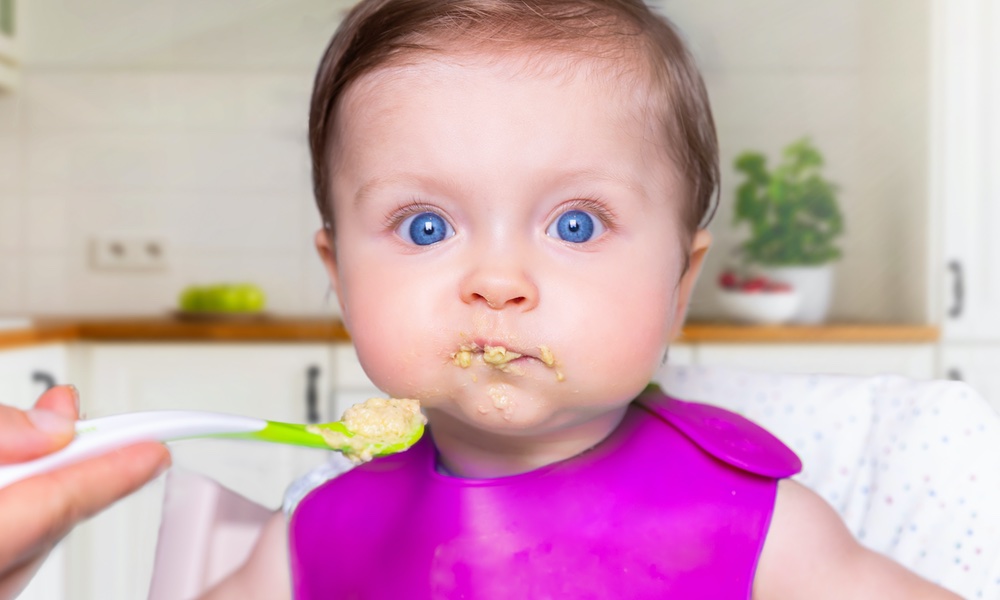


Parents food shopping for toddlers often assume that foods marketed specifically for their young kids are healthier than similar products found elsewhere in the grocery store. After all, packaging covered with the faces of smiling toddlers and fruits and vegetables gives the impression that these foods have passed a higher nutritional bar.
But a new study suggests this assumption deserves a second look.
Researchers found more than four out of five packaged foods sold for toddlers are ultraprocessed, and nearly half fail to meet at least one nutrient standard established by the World Health Organization (WHO) for children between 6 and 36 months of age.
The findings suggest that many products parents may view as healthy choices contain more sugar, sodium, fat or calories than experts recommend during this critical stage of growth and development.Bright labels can be persuasive, while the nutrition facts tell the real story. Spending an extra minute reading them may be one of the simplest ways to give young children a healthier start.
To see exactly what parents encounter when shopping, the researchers, led by Erin A. Hudson, an American Society for Nutrition Science Policy Fellow and PhD candidate at The University of Texas at Austin, and senior author Marissa Burgermaster, an assistant professor of nutritional sciences there, visited 21 grocery stores in Austin, Texas, photographing every packaged food marketed for children between 6 and 36 months of age.
Instant formulas, beverages and first-food purees were excluded because the investigators wanted to focus on products intended for toddlers. They evaluated 2,783 foods in all, examining their nutrition labels, ingredient lists and degree of processing.
The team used the NOVA food classification system, which groups foods according to how extensively they have been processed. Foods that undergo multiple industrial processing steps and contain ingredients rarely found in home kitchens, including emulsifiers, flavorings and other additives, are classified as ultraprocessed.
Over 80 percent of the products fell into the ultraprocessed category, they reported. They also compared each food with the WHO Nutrition and Promotion Profile Model, which outlines recommended nutrient levels for commercial foods marketed to young children. Nearly half of all products failed to meet at least one of those standards.
Some categories stood out. Seventeen percent of products exceeded recommended sugar levels, while one-quarter contained too much sodium. Eleven percent surpassed recommended fat levels, and 12 percent exceeded recommended calorie density.
Among the products identified were fruit pouches and oat bars high in sugar, ready-to-eat macaroni and cheese, turkey sticks high in sodium and fat, as well as peanut butter puffs that were high in sodium, fat and calories.
The findings matter because eating habits begin developing remarkably early in life. Foods eaten during the toddler years help shape children's taste preferences and dietary patterns, which often continue into later childhood. The study also noted that ultraprocessed foods were significantly more likely than less-processed foods to contain excessive amounts of sugar.
Parents shouldn't assume that products marketed for toddlers have already met rigorous nutritional standards. “Many parents may assume that products sold on the baby/toddler food aisles of their grocery stores have to meet certain nutrient standards. Our findings highlight that half of the toddler foods available in local grocery stores do not. As a result, parents have to be vigilant in checking labels and ingredients to determine the nutrient content and processing level of products for their toddlers,” Hudson said in a press release.Researchers visited grocery stores and photographed every packaged food marketed for children between 6 and 36 months of age.
The findings come as federal officials consider new front-of-package nutrition labeling and updated rules governing health claims on food packaging. Currently, the United States does not require warning labels on foods marketed for young children that are high in sugar, sodium or calories.
While policymakers debate those changes, parents can take a few practical steps now. Nutrition experts recommend:
- Look beyond the colorful packaging and read the ingredient list
- Pay attention to the nutrition label
- Compare products for added sugar and sodium
- Choose the healthier options
And once children are old enough to safely chew a variety of foods, many experts recommend serving kids “real” food — versions of the same nutritious meals the rest of the family enjoys, rather than relying on packaged toddler foods.
The study doesn't suggest that every packaged toddler food is unhealthy. But it does offer an important reminder: colorful labels designed to market a product can be persuasive, but the nutrition facts tell the real story. Spending an extra minute reading them may be one of the simplest ways to give young children a healthier start. The researchers also hope their findings encourage food manufacturers to improve the nutritional quality of toddler foods.“Many parents may assume that products sold on the baby/toddler food aisles of their grocery stores meet certain nutrient standards. Our findings highlight that half of the toddler foods available in local grocery stores do not.”
The research was presented at the American Society of Nutrition's NUTRITION 2026 Conference. It has not yet been published in a peer-reviewed journal.