

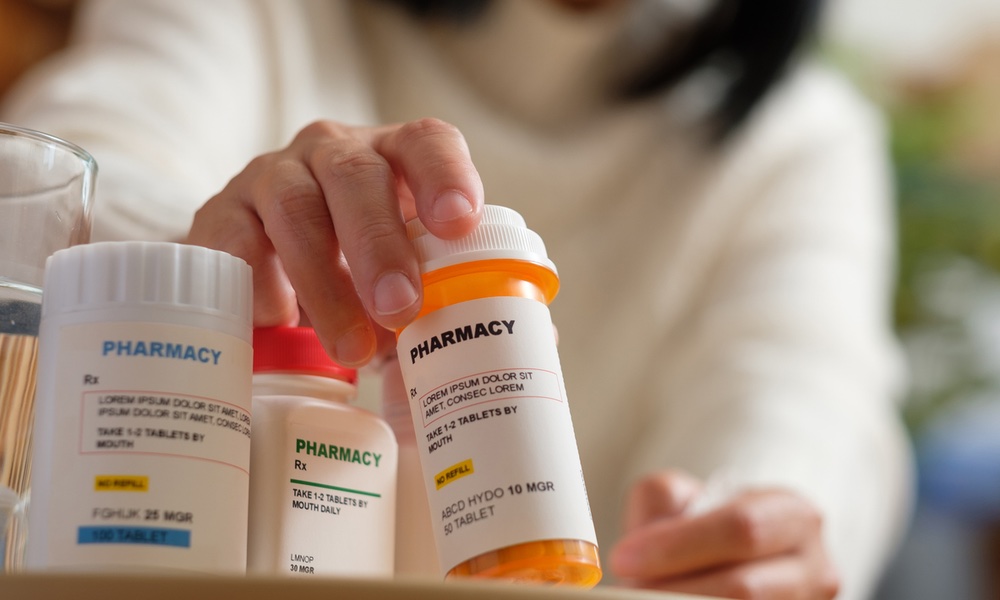


Older adults often take multiple medications and dietary supplements every day or every week. This polypharmacy — the regular use of multiple medications and supplements — comes with the risk of serious or even fatal drug-drug interactions.
A team led by researchers at the University of Southern California has been following polypharmacy and the risk of drug-drug interactions among older adults since about 2008. Their new study tracked how polypharmacy and the risk of drug-drug interactions has changed since 2015 and shifts in the frequency of issues among different medications.
The researchers analyzed data from the National Social Life, Health and Aging Project, a representative sample of community-dwelling U.S. adults between the ages of 62 and 85 years old. Data from more than 2,750 adults from the 2015-2016 wave and data from more than 2,180 adults from the 2021-2023 wave were included in the study. The average age of participants was 70 to 71 years old.The regular use of multiple medications and supplements comes with the risk of serious or even fatal drug-drug interactions.
- More medications have become available during that time.
- The use of multiple medications to treat the same condition may have also increased.
- New benefits of and uses for existing drugs may have been identified, so people started taking them more frequently.
- More people may have started relying on dietary supplements to treat various conditions.
Vitamins and minerals taken to improve health also can contribute to unwanted interactions. The use of five or more dietary supplements increased by about four percent.
Medication regimens with the potential for serious drug-drug interactions declined by more than three percent, but this decline is mostly related to the more than two percent decline in the use of potentially interacting regimens involving prescription medications, according to the researchers. The use of opioids decreased by about one-and-a-half percent, and the use of benzodiazepines decreased by almost three percent, a finding that makes sense, since, as Qato told TheDoctor, “The U.S. Food and Drug Administration has issued multiple warnings about using opioids and benzodiazepines together, so people are more aware of the risks.”
Most types of medications associated with potentially serious drug-drug interactions stayed the same, however.
Talk to your doctor or pharmacist to make sure that any prescription or over-the-counter medications and dietary supplements you take are safe if used together, Qato advised. Know the reason for taking each medication, so you can be sure a drug treatment isn't being duplicated.To make sure drug treatments aren't being duplicated, know the reason for taking each medication.
Qato recommends those concerned about drug-drug interactions go to the Drug Interaction Checker on drugs.com.
The study is published in JAMA.