

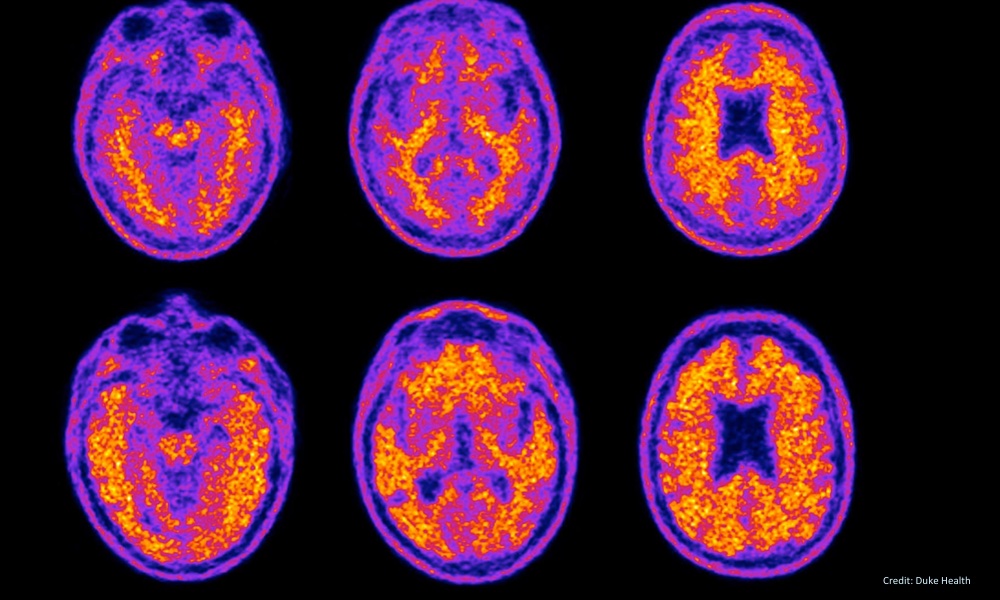


Seniors concerned about staying sharp may want to pay attention to a group of patients with early Alzheimer's disease who were willing to undergo intensive evaluation and anti-amyloid treatment.
This group would seem especially motivated to do everything possible to protect their brains, but a new study suggests that medication is only part of the equation, and even seemingly motivated patients may have difficulty following recommendations for maintaining brain health, though a similar group not receiving treatment did little better.
Researchers at Mass General Brigham Neuroscience Institute studied 150 people with mild cognitive impairment (MCI), a mild form of dementia caused by Alzheimer's disease, who were seeking anti-amyloid antibody treatment. They compared the treated MCI patients with 117 MCI patients who were receiving care in a cognitive neurology clinic but were not pursuing anti-amyloid therapy.
The goal was to see how closely patients with early Alzheimer's were following established recommendations for protecting brain health. The researchers evaluated 15 potentially modifiable factors associated with cognitive health using a tool called Brain Health Vital Signs.These findings reveal an important gap between knowing what may support brain health and actually making those changes.
Eleven factors affecting the brain, including diet, physical activity, cognitive activity, sleep, social engagement, smoking, alcohol consumption, hearing, vision, mood and stress, as well as purpose in life, were assessed through an electronic questionnaire.
Other factors affecting brain health, including blood pressure, body mass index, LDL cholesterol and hemoglobin A1C, a measure of blood sugar, were obtained from patient's electronic medical records.
Patients seeking treatment were evaluated through Mass General Brigham's Alzheimer's Therapeutics Program for possible treatment with lecanemab, a medication that works to clear amyloid plaques from the brain. The comparison patients were receiving care in a general cognitive neurology clinic but were not pursuing treatment with lecanemab.
The findings were sobering. Fewer than 3 percent of patients pursuing anti-amyloid therapy were following all 15 brain-health recommendations or had measurements and laboratory values consistent with all of them.
The five areas with the lowest adherence were physical activity, mood and stress, hemoglobin A1C, blood pressure and a high BMI. Between 44 and 63 percent of patients in the treatment-seeking group were not optimally following recommendations in those areas. More than one quarter were falling short on 11 of the 15 factors. Physical activity was particularly problematic. Sixty-three percent of patients seeking anti-amyloid treatment did not achieve at least 25 minutes of activity per day on most days of the week.Physical activity was particularly problematic — 63 percent of patients seeking anti-amyloid treatment did not achieve at least 25 minutes of activity per day on most days of the week.
Importantly, patients pursuing anti-amyloid treatment were not significantly better at following brain health recommendations than those who were not pursuing the therapy. Researchers found no robust difference in either the degree or pattern of adherence between the two groups.
"The results show there is much more work to be done," Kirk R. Daffner, the study's lead author and a neurologist at the Mass General Brigham Neuroscience Institute, said in a press release. "Because patients pursuing anti-amyloid therapy were willing to receive lecanemab infusions every two weeks and tolerate the risk associated with the medication, we thought the highly motivated group might be pursuing every avenue available to protect their brain health."
Unfortunately, this was not the case.
The researchers stressed that the study cannot establish that failing to follow a particular recommendation causes Alzheimer's disease to worsen. It was observational rather than an experiment, and 11 of the 15 factors were based on patient self-reports, which can be affected by recall errors. The treatment-seeking group was also nearly all white, highly educated and financially comfortable, also limiting how broadly the findings can be applied.
Still the findings reveal an important gap between knowing what may support brain health and actually making those changes. The researchers' conclusion is that health systems may need to provide more individualized help with modifiable risk factors, rather than simply advising patients about what they should do.
For patients and families, the findings offer a useful reminder: Brain health isn't something addressed only in a neurologist's office. It's what you do every day. Movement, sleep, stress, blood pressure control, blood sugar and social connection remain part of the picture, even after patient begins sophisticated Alzheimer's treatment.
The study is published in The Journal of Prevention of Alzheimer's Disease.