

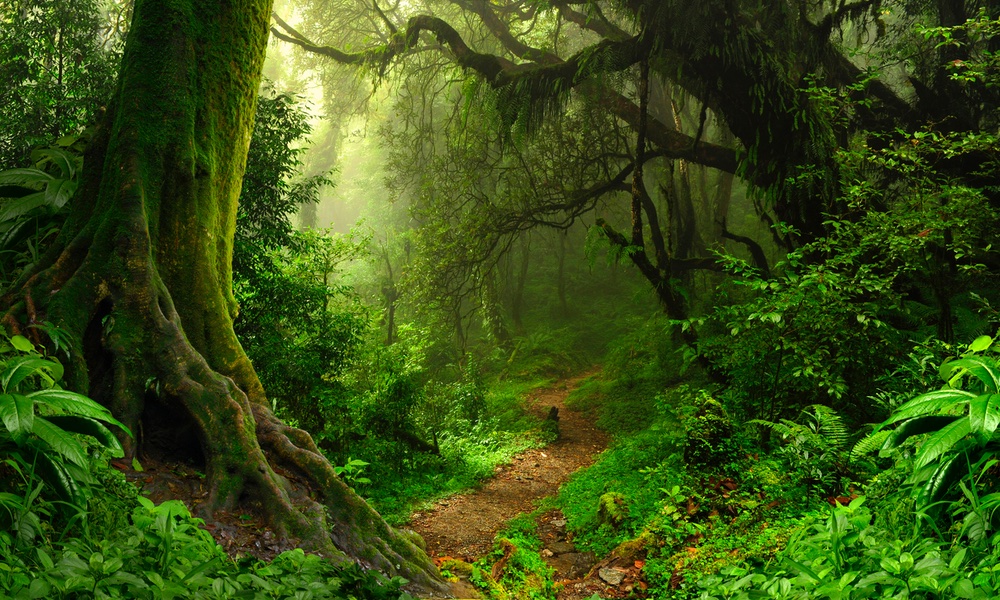


Old forests have long been admired for their beauty and biodiversity, but new research suggests they may also be one of our most powerful and underappreciated tools in the fight against climate change.
Sweden's boreal forests are vast, northern woodlands that stretch across Scandinavia and represent the largest forest biome on Earth. These forests already play a major role in stabilizing the climate, absorbing roughly 30 percent of the carbon dioxide (CO2) emissions generated by human activity.
A new study published in the journal Science takes a closer look at forests' contributions to carbon capture. Its results indicate we have been underestimating just how valuable untouched forests really are.Old-growth forests act like long-term carbon vaults, quietly storing vast amounts of greenhouse gases that would otherwise contribute to warming the planet.
The study was led by researcher Didac Pascual and an international team that combined several large datasets, including the Swedish National Forest Inventory and the Swedish National Forest Soil Inventory. They also conducted targeted field surveys to fill in critical gaps. Together, these sources allowed the researchers to build one of the most detailed pictures to date of how carbon is stored in different types of forests.
Rather than looking only at trees, the team took a comprehensive approach. They measured carbon stored in living vegetation, dead wood, soil and even harvested wood products. This broader perspective revealed something especially important. Much of the carbon in forests isn't in the trees at all — it's in the soil beneath them.
And that's where primary forests stand out. Because they have been left largely undisturbed, old-growth forests accumulate carbon over long periods, especially in their soils. By contrast, managed forests, those that are logged, replanted and often altered through practices like fertilization or drainage, tend to lose some of the stored carbon during harvesting and soil disruption.
Overall, the researchers found that Sweden's primary forests store an additional 9.9 kilograms of carbon per square meter compared to managed forests. That's between 2.7 and 8 times higher than earlier estimates had suggested.Undisturbed, old-growth forests store more than 70 percent more carbon than forests that have been logged and regrown. That's because much of the carbon in forests isn't in the trees at all — it's in the soil beneath them.
“Primary forests hold substantially more carbon across all pools than managed forests, highlighting their critical role in climate mitigation,” Pascual, a postdoctoral fellow in the Department of Physical Geography and Ecosystem Science at Lund University in Sweden, explained in a press release.
The finding comes at a time when demand for timber and bioenergy is rising. Across Europe and beyond, forests are increasingly managed to produce wood products and renewable energy sources. These practices often involve clear-cutting, planting fast-growing tree species, and altering soil conditions to maximize yield — all of which undermine carbon storage.
While such approaches can provide economic benefits, this research raises questions about their long-term climate impact. If converting old-growth forests into managed ones significantly reduces their carbon storage capacity, the trade-off may be greater than previously thought. In other words, we may be losing a powerful natural ally in our efforts to slow global warming.
The study also highlights a key challenge: primary forests are relatively rare and not as well studied as managed forests. That makes it harder for scientists to fully understand their role in the global carbon cycle. But as this research shows, protecting and studying these ecosystems could be essential for shaping smarter climate policies.
The takeaway is both simple and profound: Not all forests are created equal. While planting trees and managing forests are important strategies, preserving existing old-growth forests may be even more critical. These ancient ecosystems act like long-term carbon vaults, quietly storing vast amounts of greenhouse gases that would otherwise contribute to warming the planet. In a world searching for answers to a complex climate crisis, Sweden's old forests remind us that some of the best solutions have been growing all along.