

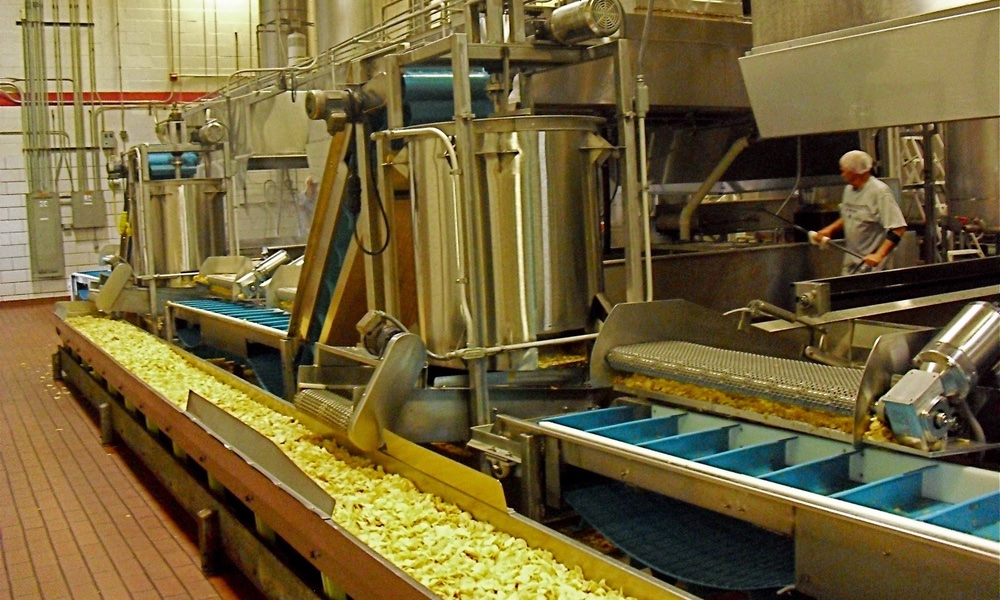


Nutrition experts have long blamed the health risks of ultra-processed foods on what they contain: too little fiber, too much sugar, too much sodium, too much saturated fat and too many calories.
But that may only be part of the picture.
The industrial processing methods used to create many packaged foods may carry health risks of their own, researchers at Tufts University's Food Medicine Institute have found. Even when the nutritional profile of the processed and unprocessed foods was equivalent, people who consumed larger amounts of ultra-processed foods had poorer health.
The study tackles one of the most important and controversial questions in nutrition science today. If two foods contain similar amounts of fat, sugar and sodium, does it matter how those foods were manufactured? According to the Tufts researchers' findings, the answer most likely is yes.Was a person's health affected by poor nutrition — or by the processing itself?
For the study, investigators analyzed data from the National Health and Nutrition Examination Survey (NHANES), one of the nation's largest ongoing health databases. The researchers examined information collected over nearly two decades, from 1999 through 2018, and linked those records to mortality data from the National Death Index.
Participants completed one or two detailed 24-hour dietary recalls describing everything they had eaten. The research team then categorized foods according to the degree of processing. Fresh fruits and vegetables, for example, were considered minimally processed, while products manufactured with industrial ingredients, additives, flavorings and preservatives were classified as ultra-processed.
The team also rated the overall nutritional quality of each participant's diet using established measures of healthfulness. That allowed them to separate two questions that are often tangled together. Was a person's health affected by poor nutrition — or by the processing itself? What they concluded was significant.
As consumption of ultra-processed foods increased, so did signs of poorer health. For every 10 percent increase in calories derived from ultra-processed foods, participants tended to weigh more, have higher blood pressure, poorer blood sugar control and less favorable cholesterol levels.
They were also more likely to have diabetes, metabolic syndrome and cancer. In addition, they faced a moderately increased risk of death during the study period.
Perhaps most important, those associations remained even after researchers adjusted for nutrient quality, as well as the amounts of saturated fat, added sugar and sodium in the foods consumed. This finding suggests something beyond the nutrient profile may be contributing to harm.
“The findings suggest ultra-processed-food factors beyond nutrients — such as changes to foods' cellular structure, loss of beneficial chemical compounds, additives, and chemicals from packaging — may create health risks not addressed by traditional nutrition metrics or policies,” senior author Dariush Mozaffarian, a cardiologist and director of the Food is Medicine Institute at Tufts University, said in a press release.If two foods contain similar amounts of fat, sugar and sodium, does it matter how those foods were manufactured? The answer appears to be yes.
Scientists do not yet know precisely which aspects of processing may be responsible. Possibilities include chemical additives, alterations in food structure that affect digestion and metabolism, compounds that migrate from packaging into foods or the loss of naturally occurring substances present in less processed products.
The findings are particularly important because ultra-processed foods have become a dominant feature of the American diet. According to researchers, they account for more than half of all calories consumed by U.S. adults and about 60 percent of calories consumed by children.
This study was observational, meaning it cannot prove that ultra-processed foods directly caused the observed health problems. Still, the consistency of the findings across different groups of participants adds to a growing body of evidence linking these products to chronic diseases.
The research may also have implications beyond the grocery store. Policymakers, public health officials and federal regulators are currently debating whether ultra-processed foods should receive their own formal definition and whether additional measures, from warning labels to restrictions on certain additives, are warranted.
For consumers, the message may be simpler. Nutrition labels remain important, but they may not tell the whole story. Increasingly, researchers are finding that when it comes to food, how something is made may matter almost as much as what's in it.
The study is published in American Journal of Public Health.