



For people living with Crohn's disease, daily life can feel like a balancing act in which they must manage symptoms, medications, food choices and fatigue, all while hoping to keep the discomfort of their Crohn's symptoms at bay.
Now they have a new tool for doing this: A small, but carefully designed, study suggests that when you eat may matter almost as much as what you eat.
Research led by scientists at Canada's University of Calgary found that adults with Crohn's who practiced time-restricted feeding — a form of fasting — experienced a striking reduction in disease activity and inflammation over a period of 12 weeks.
The study, a randomized controlled clinical trial published in the journal Gastroenterology, is the first to test this approach specifically in people with inflammatory bowel disease (IBD).Because calorie intake and diet quality were similar in both groups, the benefits appear to be driven by meal timing, rather than weight loss alone.
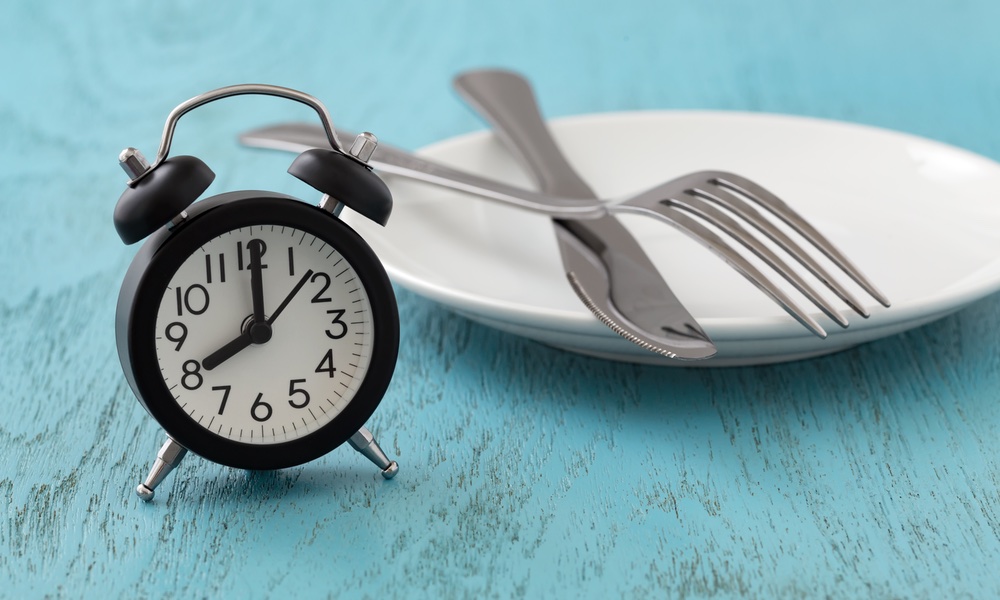
Time-restricted feeding, often known as time-restricted eating, refers to eating meals within a consistent eight-hour window each day and fasting for the remaining 16 hours.
Thirty-five adults with Crohn's disease, who also were overweight or obese, were randomly assigned either to follow a time-restricted feeding schedule or to continue their usual eating schedule.
Twenty participants practiced time-restricted feeding, while 15 served as controls. Both groups ate similar foods and comparable amounts of calories, allowing researchers to isolate the effects of meal timing itself.
The results were significant. Crohn's patients practicing time-restricted eating had a 40 percent reduction in Crohn's disease activity and a 50 percent decrease in abdominal discomfort.
Participants practicing time restricted eating lost an average of about 5.5 pounds, while those in the control group gained roughly 3.7 pounds. Their blood tests also showed significant drops in markers of inflammation and immune dysfunction, including leptin and plasminogen activator inhibitor-1 (PAI-1).
“This study shows that while weight loss is an important outcome in people with overweight and Crohn's disease, time-restricted feeding offers additional benefits beyond just the scale,” the study's lead author, Maitreyi Raman, MD, Associate Professor of Medicine at the University of Calgary, said in a media release.
“We saw meaningful improvements in disease symptoms, reduced abdominal discomfort, favorable shifts in metabolism and inflammation, and promising changes in gut bacteria — all suggesting that intermittent fasting may help patients maintain lasting remission from Crohn's disease,” Dr. Raman added.
Inflammation, disease activity and body composition were measured at the beginning and end of the 12-week study. Researchers observed a reduction in harmful visceral fat, known to fuel inflammation, among those practicing intermittent fasting. Because calorie intake and diet quality were similar in both groups, the benefits appear to be driven by meal timing, rather than weight loss alone.
“Time-restricted feeding is showing real promise as a new way to help people with Crohn's disease manage not only their symptoms but also their overall health,” said lead investigator, Natasha Haskey, a research associate at the University of British Columbia. “Our research suggests time-restricted eating may be a sustainable option grounded in biology, offering patients more ways to manage their wellness.”Those practicing time-restricted eating had a 40 percent reduction in Crohn's disease activity and a 50 percent decrease in abdominal discomfort.
The authors emphasize that intermittent fasting is not a substitute for medical therapy, and they urge patients to consult their healthcare team before making changes to their eating patterns. Larger and longer studies are also needed to confirm safety and effectiveness across broader groups of people with IBD. Still, the findings offer a hopeful glimpse of how simple lifestyle strategies may one day complement standard Crohn's disease care.
As scientists continue to explore the gut's internal clock, this study underscores the growing truth: when we eat may be as powerful as what we eat.
The study is published in Gastroenterology.