

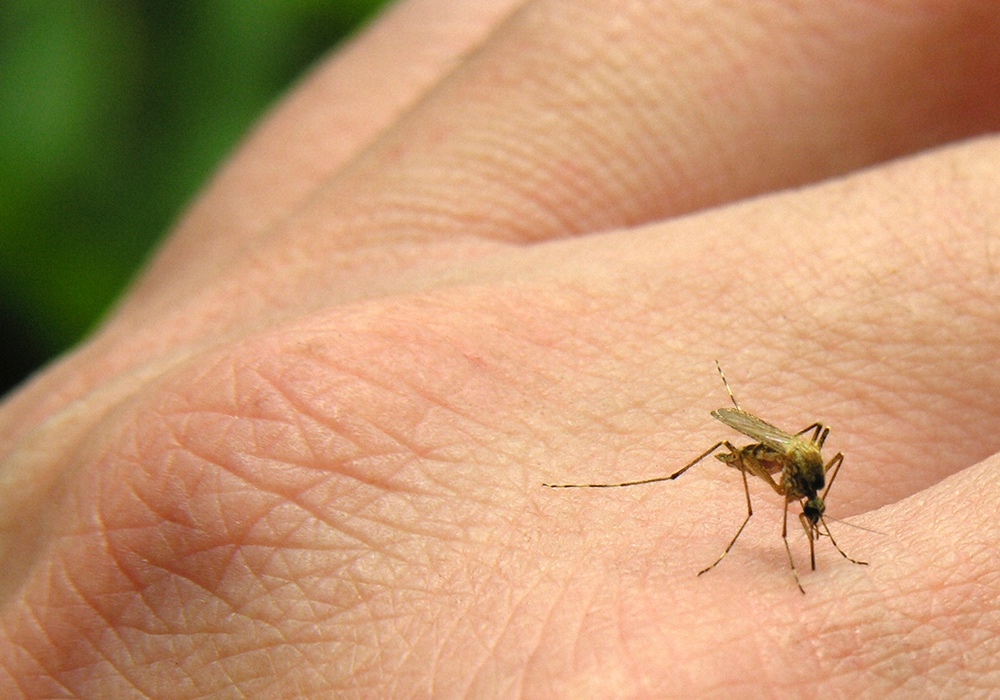


Summer evenings are a lot more enjoyable without mosquitoes. That's why millions of homeowners hire mosquito-control companies or spray their own yards. But those efforts may have an unintended consequence. They could be helping mosquitoes become more resistant to the very insecticides designed to kill them.
Two studies from North Carolina State University found that repeated backyard spraying appears to be encouraging the rapid evolution of insecticide-resistant tiger mosquitoes, an invasive species now widespread across much of the eastern United States. The findings raise concerns that one of our most commonly-used mosquito-control tools could gradually lose its effectiveness.
The researchers focused on the Asian tiger mosquito because it has become one of the country's most common day-biting mosquitoes. Besides being an annoying backyard pest, it can carry viruses such as dengue, Zika and chikungunya, as well as heartworm in dogs. The mosquito thrives in neighborhoods where it breeds in flowerpots, birdbaths, clogged gutters and any other container that collects standing water.Repeated backyard spraying appears to be encouraging the rapid evolution of insecticide-resistant mosquitoes.
The second study investigated whether neighborhood characteristics, including property values, used as a marker of household wealth, were associated with higher rates of resistance.
Researchers used genetic screening to identify a mutation known as “knockdown resistance,” or kdr, which makes mosquitoes less sensitive to pyrethroids, the insecticides most commonly used in residential mosquito sprays.Eliminate standing water before mosquitoes have a chance to hatch by emptying birdbaths and pet dishes regularly, cleaning clogged gutters and removing any containers that collect rainwater.
The researchers found:
- There were no resistant mosquitos in samples collected during 2016 and 2017.
- The first resistant insects appeared in a small cluster in 2018.
- Resistant-associated mutations had spread to 84 percent of the residential blocks that were sampled within five years.
- Thirty-nine percent of those mosquitoes carried the mutation.
The second study revealed another intriguing pattern. Mosquito resistance was significantly more common in neighborhoods with higher property values. Although the investigators did not measure exactly how often residents sprayed their yards, they believe wealthier homeowners may be more likely to hire mosquito-control companies or purchase insecticide treatments, creating stronger selection pressure that allows resistant mosquitoes to survive and reproduce.
“This mutation is often the first to show up when there's insecticide resistance,” Martha O. Burford Reiskind, Associate Professor of Biological Sciences at North Carolina State University and corresponding author of both studies, said in a press release.
That doesn't mean homeowners should stop trying to control mosquitoes. Pyrethroid insecticides remain important tools, especially in places where mosquito-borne diseases are common. But the researchers say it's time to rely less on chemicals alone and use a broader strategy known as integrated pest management.
It starts with eliminating standing water before mosquitoes have a chance to hatch. Empty birdbaths regularly, clean clogged gutters, turn over buckets and flowerpot saucers, refresh pet water bowls frequently and remove any containers that collect rainwater. These simple steps target mosquitoes during their larval stage, reducing the need for repeated spraying later in the season.Besides being an annoying backyard pest, mosquitos can carry viruses such as dengue, Zika and chikungunya, as well as heartworm in dogs.
The researchers also emphasize that insecticide resistance is not just a nuisance issue. If resistant mosquitoes become more widespread, public health officials could eventually have fewer effective tools available during outbreaks of mosquito-borne diseases.
For now, the findings serve as a reminder that more isn't always better. Spraying every few weeks may seem like the easiest solution to a mosquito problem, but over time it may encourage the survival of the toughest insects. A smarter approach combines limited insecticide use, good yard maintenance, reducing mosquito populations while helping preserve the effectiveness of the products we depend on when they matter most.
The first study, "Emergence and spatial distribution of knockdown resistance in a suburban population of Aedes albopictus," is published in Parasite & Vectors. The second, "Socioeconomic predictors of knockdown resistance in the globally invasive tiger mosquito Aedes albopictus," is published in Royal Society Open Science.