



For many of us, setting a goal of daily steps can feel like one more item on our already crowded to-do list.
The good news is that people who can't rack up several thousands of steps every day can still gain important health benefits by picking up the pace while they walk, a recent study finds.
Australian researchers examined the relationship between the number of steps people take, how quickly they walk and their risk of dying prematurely.
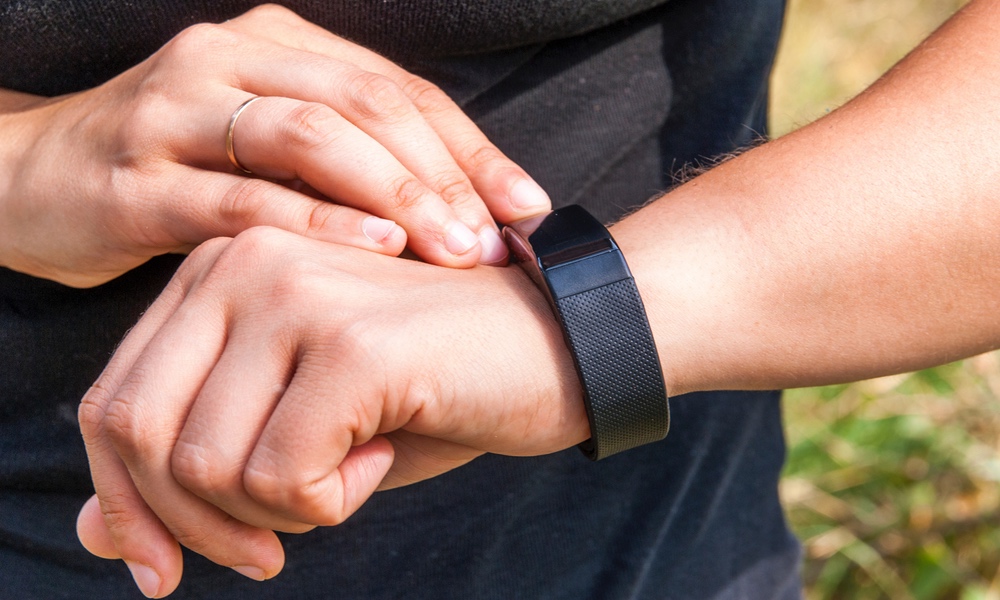
The University of Sydney team analyzed data from the UK Biobank, a large database containing health and genetic information from hundreds and thousands of adults in the United Kingdom. The investigators focused on nearly 104,000 middle-aged participants who wore wrist-based activity trackers for seven consecutive days between 2013 and 2015. The devices recorded both the number and intensity of their daily steps.Overall, the study found the lowest risk was associated with taking 7,500 to 10,000 steps per day, regardless of walking pace.
The researchers then followed participants' health through November 2022.
Over 64,500 participants with an average age of 61 were included in the analysis of step count and mortality. The researchers divided participants into four groups according to their daily step tolls:
- Fewer than 5,000 steps a day
- 5,000 to 7,500 steps a day
- 7,500 to 10,000 steps a day
- More than 10,000 steps a day
They also calculated a person's average number of steps per minute during their most active 30 minutes of the day, something they called "peak-30 cadence."
The findings suggested that both the amount and intensity of walking matter, but they may compensate for each other to some degree. For example, among folks taking fewer than 5,000 steps a day, those who reached a pace of at least 80 steps per minute had a substantially lower mortality risk than those walking at a slower pace. Their reduction in risk was comparable to people taking 5,000 to 7,500 daily steps at a slower pace of about 60 steps per minute.
Walking at a higher pace for at least 30 minutes a day was associated with progressively lower risk of death among people taking fewer than 7,500 steps daily. Overall, the study found the lowest risk was associated with taking 7,500 to 10,000 steps per day, regardless of walking pace. A brisker pace for at least 30 minutes, however, was associated with lower mortality risk across different step counts. Similar patterns were also observed for cardiovascular mortality.
This doesn't mean everyone should suddenly begin speed-walking. The study was observational, meaning it identified associations rather than proving that walking faster, or walking a particular number of steps, actually caused people to live longer. Factors other than walking habits could have influenced the results. That said, the findings offer a useful alternative to the familiar 10,000-step target.A shorter walk performed at a somewhat brisker pace may be a practical way to increase physical activity, but there is no reason those who can't comfortably walk faster should give up on walking.
Corresponding study author, Emmanuel Stamatakis, professor of physical activity, lifestyle and population health at Monash University, Melbourne Australis, put it this way: “The wider message coming from this study is behavioral flexibility. Step targets need not look identical for everyone, and people who cannot walk far, or cannot walk quickly, still have a route to lower risk.”
Ultimately, for someone who has limited time, or other barriers to walking long distances, a shorter walk performed at a somewhat brisker pace may be a practical way to increase physical activity. And for those who can't comfortably walk faster, there is no reason to give up on walking. The researcher's larger message is reassuring: There may be more than one effective way to turn walking into a health-promoting habit.
The study is published in the British Journal of Sports Medicine.