


E-bikes and e-scooters are becoming more and more popular, and injury rates among riders are also on the rise. A team led by researchers at Stanford University was particularly concerned about the increase in e-bike and e-scooter injuries in young children which are often more serious than nonmotorized bike and scooter injuries.
The researchers looked at data from more than 13,300 children and teens under 18 who were treated for bike, scooter and skateboard injuries at six U.S. pediatric hospitals. The children's ages, the severity of their injuries and where they were treated were included in the analysis.
More than 640 injuries involved e-bikes, 1,396 involved e-scooters, over 7,550 from nonmotorized bikes, 2,460 from nonmotorized scooters and over 1,200 involved skateboards. Twice as many e-bike injuries were considered severe versus those from non-motorized bikes. Severe E-scooter injuries were more than double those from non-motorized scooters.A thumb on the throttle controls the speed on e-bikes and e-scooters. Younger kids may have not developed the strength and coordination to control their speed and navigate turns and avoid cars or trees at the same time.
In the hands of younger kids, e-bikes and e-scooters become even more dangerous. Twenty-four percent of e-bike injuries and 44 percent of e-scooter injuries occurred in children younger than 12 years old.
It takes a lot of coordination and experience to safely ride an e-bike or e-scooter, Schroeder explained. Nonmotorized bikes or scooters don't go as fast as e-bikes and e-scooters, and riders can more easily control their own speed. To control the speed on e-bikes and e-scooters, the rider must use their thumb on the throttle. Younger kids may have not developed the strength and coordination to control their speed, navigate turns and avoid cars or trees at the same time.
Kids also have less experience with traffic. “Young kids don't understand the rules of the road yet. I honestly don't think kids under 12 should be riding any form of motorized vehicle,” said Schroeder. Parents should ask themselves why their child needs an e-bike or e-scooter, he added. And as a first step, kids should prove they understand how to safely ride nonelectric bikes and scooters and are coordinated and experienced enough to avoid accidents while riding them.
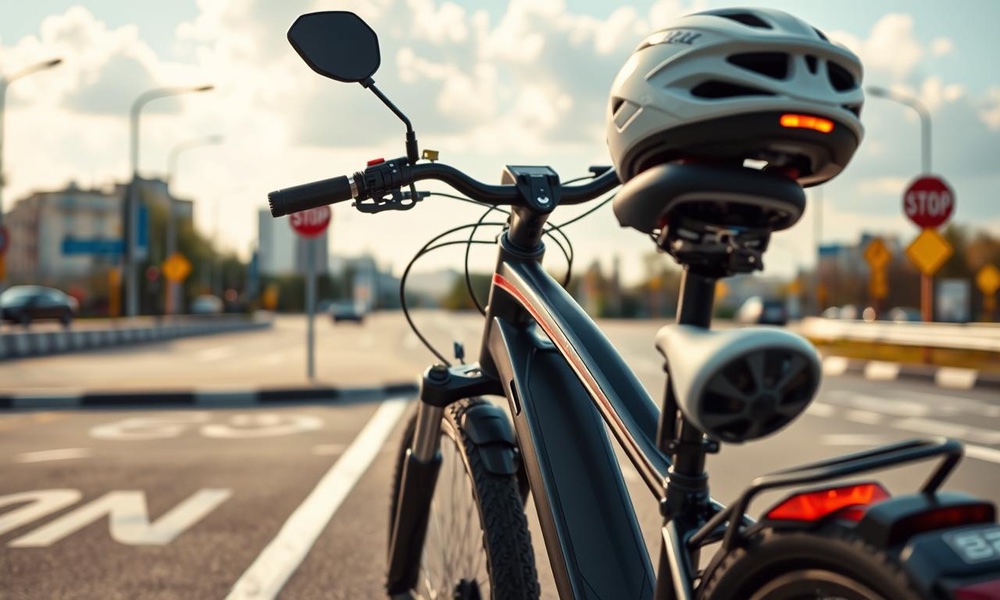
Riders should also always wear a suitable helmet — a standard bike helmet is probably inadequate. Schroeder, a clinical professor of pediatrics at Stanford, said, though it's better than nothing.E-bike riders also need a helmet built for more speed than a standard bike helmet, just as motorcycle riders wear more protective helmets than bike riders do.
E-bike riders need a helmet built for more speed than a standard bike helmet, just as motorcycle riders wear more protective helmets — to withstand a high-speed crash — than bike riders do, Schroeder explained.
To help families decide if kids are ready for an e-bike or e-scooter, the injury prevention program at Stanford Medicine Children's Health offers an e-bike safety guide. For example, it asks parents to consider if their child:
- Wears a helmet without being reminded
- Follows the rules of the road without being reminded
- Always takes off their ear buds and stays off their phone while riding
If the answer to each is not "yes," it may be wisest to wait to purchase an e-bike. The guide also includes tips on riding e-bikes and e-scooters safely.
The study is published in JAMA: the Journal of the American Medical Association.