



Dr. Saltzman is Assistant Professor of Medicine, Director, Obesity Consultation Center, and Chief, Division of Clinical Nutrition, Tufts-New England Medical Center, and Scientist II, Jean Mayer USDA Human Nutrition Research Center on Aging, Tufts University School of Medicine, Boston.
Within the past three years, Dr. Saltzman has been a consultant for Ortho-McNeil and has been on the Speakers' Bureau for Roche and Abbott Pharmaceuticals.
Within the past three years, Dr. Saltzman has been a consultant for Ortho-McNeil and has been on the Speakers' Bureau for Roche and Abbott Pharmaceuticals.
While nutrients such as vitamin E, vitamin C and carotenoids have received substantial attention in the media and the medical literature, vitamin K is seldom mentioned. Traditionally thought to be important only for its role in coagulation, recent advances in vitamin K research suggest that it may have an important role in bone health and vascular disease. The new research also suggests a potentially important interaction between vitamins K and E and, further, that food processing may result in alterations in vitamin K form and function.
Vitamin K: What Is It and Where Does It Come From?
Vitamin K is a fat soluble vitamin found in a variety of food sources. Vitamin K refers to a family of compounds (Figure 1), the most common consumed form being phylloquinone (vitamin K1) which is found in plants.
Figure 1.
Forms of Vitamin K.
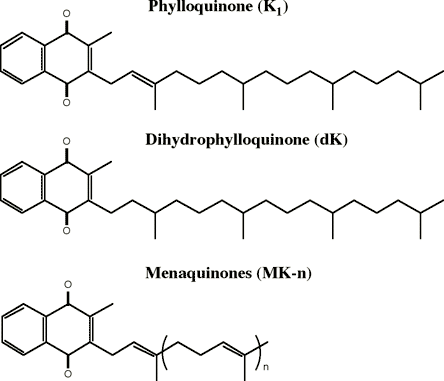
Green leafy vegetables are among the richest sources; vegetables account for approximately 60% of vitamin K intake in the US. Vitamin K is also found in some plant oils and products derived from plant oils such as salad dressing or margarine, as well as in an increasing number of dietary supplements, though in low amounts.
When phylloquinone-containing vegetable oils such as soybean, canola or cottonseed are hydrogenated during food processing, a hydrogenated form of vitamin K, dihydro-vitamin K, is also formed. High concentrations of dihydro-vitamin K occur in processed foods, especially fast food French fries, doughnuts and potato chips.
Non-plant forms of vitamin K, the menaquinones (MK), are present in some animal foods and in products derived from bacterial fermentation [e.g., milk, meats, certain organs (liver), fermented soybean products and fermented cheeses].
It has long been believed that approximately half of human vitamin K is derived from the bacteria in our gut, but more recent evidence suggests that most of our vitamin K is derived from outside our bodies and that bacterial sources within the gut are far less important than previously believed.
What Are the Biologic Actions of Vitamin K?
Vitamin K has long been recognized as necessary for coagulation. Vitamin K acts as a cofactor helping to introduce carbon dioxide (carboxylation) into glutamic acid (Glu) residues of approximately 12 proteins (Figure 2). The resulting amino acid formed, γ-carboxyglutamic acid (Gla), in the presence of vitamin K has calcium-binding properties that confer function to all vitamin K-dependent proteins, also known as Gla-containing proteins. Amino acids are the chief building block of proteins.
Figure 2.
The Vitamin K Cycle.
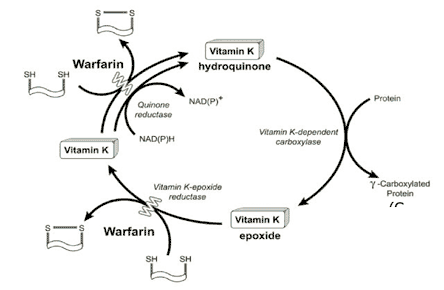
There are also proteins which are produced outside the liver that require vitamin K for their function. Several of these proteins are found in bone, including osteocalcin (OC), matrix Gla protein (MGP) and Protein S. Osteocalcin is a protein produced in bone-forming cells (osteoblasts) and has been used as an indicator of bone formation. Osteocalcin, the most abundant noncollagenous protein in bone, binds to the hydroxyapatite (a calcium phosphate mineral that is the basic structural component of bone)in bone, suggesting that vitamin K may have a role in promoting bone mineralization.
Matrix Gla protein (MGP) is also present in other tissues such as cartilage and the walls of blood vessels. There is some indication that MGP may have a role in the regulation of calcification of these tissues. Other tissues with relatively high levels of vitamin K and vitamin K-dependent proteins include the central nervous system (CNS), though we do not yet have research which explains its role, if any, in the human nervous system.
How Is Vitamin K Status Measured?
The classic measure of vitamin K deficiency involves prothrombin (factor II), a vitamin K-dependent protein that determines how long it takes for your blood to clot ("prothrombin time"). However, more recent research indicates that the measurement of prothombin time (PT) is in fact an insensitive measure of vitamin K deficiency.
While a PT is appropriate for monitoring the patient who is taking blood thinners, and thus have thei actions of their Vitamin K blocked, more sensitive measures are needed to measure Vitamin K levels. One proposed test of uindercarboxylation (i.e., interference with the function of Vitamin K) not yet available to doctors measures the level of PIVKA-II (Proteins Induced by Vitamin K Absence or Antagonism - Factor II). For measurement of vitamin K status in tissues such as bones, the percentage of undercarboxylated osteocalcin (OC) in the blood serum appears to be the most sensitive of indicators currently available.
When serum or plasma vitamin K are measured, the level generally reflects recent intake — depletion or supplementation can lead to marked changes over a period of just a few days. There are also non-dietary factors that influence circulating levels of vitamin K, the most significant being the plasma level of triglycerides. Because vitamin K is primarily transported on the triglyceride-rich fat particles (chylomicrons), circulating vitamin K levels tend to be elevated in the patient who has high lipid levels.
For reasons not clearly understood, between 10-15% of the general adult population have low or undetectable vitamin K levels, despite having normal body stores and normal coagulation function. Therefore, a single phylloquinone determination is often an unreliable indicator of vitamin K status. Body stores of vitamin K also appear to be lower than those for other fat-soluble vitamins, presumably because vitamin K is continually being recycled. Further, each tissue appears to preferentially store different forms or metabolites.
Is Vitamin K Good for Bones?
Observational studies consistently demonstrate a relationship between vitamin K and bone health in older people. In these studies, both habitual vitamin K intake as well as biologic markers of vitamin K sufficiency have been examined in relation to bone mineral density (BMD) and fracture risk. In the Framingham Offspring Study, women in the top quartile of vitamin K intake had significantly greater BMD than those with lower intake. Such observations are consistent with in vitro and animal studies, suggesting a role for vitamin K in the promotion of bone mineral deposition.
There are few studies published to date investigating the influence of vitamin K supplementation on bone. Braam et al. compared supplementation of vitamin K1 (1 mg/day), vitamin D and calcium with supplementation consisting only of vitamin D and calcium in postmenopausal women. The group receiving vitamin K with calcium and vitamin D had reduced bone loss at the hip (but not spine) over three years. In another trial, supplementation with pharmacological doses of MK-4 (45 mg/day), a non-plant form of Vitamin K,resulted in increased lumbar BMD and reduced fracture rate over 24 month. However, it should be noted that the latter trial used pharmacological doses of MK-4, which is not consumed in high amounts in the diet.
Indeed the recommended intakes for vitamin K are currently set at 90 - 120 µg/d, and in vitro evidence does suggest that pharmacological doses of MK-4 have a direct effect on bone resorption attributable to mechanisms other than vitamin K- dependentγ-carboxylation. While these first studies are promising, more clinical trials using physiological doses of vitamin K are required before conclusions can be drawn regarding the role of vitamin K on bone. It should also be emphasized that these studies need to compare the effectiveness of vitamin K supplementation in reduction of age-related bone loss in individuals consuming adequate vitamin D and calcium intakes.
A Role for Vitamin K in Coronary Heart Disease and Vascular Calcification?
In several epidemiologic studies, researchers found that the higher your Vitamin K intake, the lower your risk of heart disease. While this relationship appears to be independent of several other dietary or lifestyle factors associated with coronary heart disease (CHD), it remains unclear if higher Vitamin K levels really lower heart disease risk. For example, green leafy vegetables are the primary sources of dietary vitamin K in the US and Europe, thus vitamin K status may reflect healthy diets or lifestyles more than a specific factor associated with CHD risk.
One potential link between vitamin K and heart disease is calcification of arteries. In vitro and in vivo evidence suggest that interruption of vitamin K biological function results in abnormal arterial calcification. Specifically, interference with MGP (matrix Gla protein) function induced by vitamin K deficiency appears to be an important factor in calcification. In mice, knockout of the MGP gene results in 50% fetal death, and in live births there is marked calcification of the arterial tree as well as bone loss (osteopenia). Human data are limited primarily to case reports of individuals exposed to warfarin in utero. However, one recent study in postmenopausal women suggested that lower vitamin K status is associated with increased carotid artery calcification.
Does Vitamin E Interfere with Vitamin K?
Vitamin E has previously been reported to maximize the effect of warfarin on anticoagulation. The mechanism is unknown, although it has been suggested that vitamin E may impair absorption of vitamin K, or that tocopherol quinone, a vitamin E breakdown product, competes with the vitamin K hydroquinone, thereby further reducing the vitamin K hydroquinone's capacity to act as a cofactor for the γ-carboxylase in the anticoagulated patient. However, in vitamin E supplementation trials in individuals with normal coagulation status, there have been no consistent reports of bleeding complications, and trials specifically assessing the influence of vitamin E supplementation on coagulation have not noted a consistent effect.
Two 2004-reported studies in which vitamin E 1000 IU was provided daily for 12 weeks to adults with normal coagulation may help resolve this confusion. After 12 weeks of supplementation, PIVKA-II measures significantly increased in both studies, which included men and women of different ages. In other words, the vitamin E supplements interfered with the Vitamin K-dependent proteins produced by the liver (e.g., prothrombin). In contrast, plasma phylloquinone and undercarboxylated OC (measures of Vitamin K function in proteins produced outside the liver) were not affected by vitamin E supplementation in either study; though neither study controlled for dietary intakes of vitamin K, which influence both these parameters. In the one study in which PT was measured, there were no changes in PT nor were there adverse bleeding events in the supplemented group.
These results suggest that vitamin E does not interfere with vitamin K absorption but that there is a specific inhibition of vitamin K-dependent proteins produced in the liver or, more specifically, of prothrombin. Because this is the first study to demonstrate an interference of vitamin K by vitamin E supplementation in adults of normal coagulation, more research is required to elucidate the mechanism.
Conclusions
Current research suggests that vitamin K may have a protective role in bone and vascular health. In the latest US recommendations, the Adequate Intake (AI) recommendation of 120 mcg/d for men and 90 mcg/d for women was based on the relationship between dietary vitamin K and maintenance of normal coagulation proteins. The optimal intake needed for bone health, or prevention of atherosclerotic disease, remains undefined. For persons not taking warfarin, a diet rich in vitamin K-containing foods is recommended, which is likely to be high in other naturally occurring vitamins, minerals and antioxidants.
To date, there is no evidence that high intake of vitamin K from food has negative consequences, including promoting thrombosis. For patients taking warfarin, elimination of vitamin K from the diet may help stabilize anticoagulation but may also have long-term negative consequences. An alternative recommendation would be to encourage daily consumption of a consistent level of vitamin K intake. To assist practitioners and patients, values of the vitamin K content of foods are continuously updated and are available (: http://www.ars.usda.gov/main/site_main.htm?modecode=12-35-45-00). Everyone should also carefully read dietary supplement labels, as an increasing number of supplements now contain vitamin K.