


Although the goal of insulin therapy for people with Type 1 diabetes has always been to keep blood sugar levels near normal ranges, there is a great difference, in long-term health, between near normal and normal. According to the landmark Diabetes Control and Complications Trial (DCCT) of 1983 to 1993, frequent monitoring of bloods sugar levels and aggressive insulin treatment to keep the levels consistently as close to normal as possible (A1C test results between 6% and 7%) are the key features of good care. With tight control of blood sugar, diabetes related damage to the eyes, kidneys, nervous system, and cardiovascular system, the main scourge of Type 1 diabetes, is much less likely.
Today, people with Type 1 diabetes have many more tools to achieve this goal. For example, insulin is now available in rapid-, short-, intermediate- and long-acting formulations; these can be injected separately or mixed together in one syringe. Rapid-acting insulins have become available that are synthetic analogues (insulin lispro, insulin aspart, insulin glulisine) of natural insulin; recently, a rapid acting inhaled insulin, (Exubera®) was approved for clinical use. These analogues are chemically closer to the insulin naturally produced by the human body and are better able to mimic the action of naturally-secreted insulin; long-acting insulins are also available in analogue form (glargine and detamir); these are gradually replacing conventional intermediate-acting insulins such as lente and NPH, and the long-acting insulin, ultralente. The long-acting insulin analogues are more reliable and better at maintaining steady blood sugar levels. These are shown in Table 1a.
Insulin preparations with a predetermined proportion of intermediate-acting insulin, mixed with short- or rapid-acting insulin, are also available. These are shown in Table 1.With tight control of blood sugar, diabetes related damage to the eyes, kidneys, nervous system, and cardiovascular system, the main scourge of Type 1 diabetes, is much less likely.
| Humulin (NPH/regular) 70/30 and 50/50 (NPH/regular) |
| Humalog 75/25 (Prot-lispro/free lispro) |
| Novolin 70/30 (NPH/regular) |
| Novomix 70/30 (Prot-aspart/free aspart) |
| Peak | (duration) hrs | ||
|---|---|---|---|
 |
Rapid Acting | ||
| Humalog lispro | 1-2 | (2-6) | |
| Novolog aspart | 1-2 | (2-6) | |
| Apidra glulisine | 1-2 | (2-6) | |
| Short-Acting | |||
| Regular | 2-4 | (3-6) | |
 |
Intermediate-Acting | ||
| NPH | 6-12 | (10-24) | |
| Long-Acting | |||
| Lantus glargine | none | (24) | |
| Levemir detemir | none | (12-24) dose related |
|
Conventional insulin therapy using a single daily injection, or two injections per day, is now giving way to the basal/bolus approach. The term basal refers to lower-dose amounts given regularly to help regulate overall blood sugar levels and the term bolus refers to one-time higher-dose amounts given to help the body react to the short-term spike in blood sugar levels caused by digesting a meal. Basal insulin is given as one to two daily injections of intermediate- or long-acting insulin, or via a continuous insulin pump.
Bolus insulin — whether consisting of regular insulin, rapid-acting insulin analogues or the recently FDA-approved rapid-action inhaled insulin (Exubera®) — is given before each meal. The choice of dosage, frequency and type of insulin varies and depends on the individual's lifestyle, diet and other preferences.11 In order to achieve the best insulin treatment for any individual, it is critical to understand the different insulin types and how they act. For example, duration of action — how long they are effective within the body — is a critical consideration; this is affected by factors such as the type of insulin preparation, insulin dose, injection technique and site of injection.
Until recently, the non-analogue NPH has been the classic basal insulin. In Type 1 diabetes, NPH insulin is given as two injections — in the morning and at bedtime. The bedtime dose attempts to take advantage of its peak — a maximum insulin concentration in the blood that occurs 6-7 hours later — to meet the increased insulin demands that take place in the morning. When given before dinner, NPH may cause low blood sugar (hypoglycemia), as it typically peaks around 3 AM, the same time that bodily blood sugar levels hit a natural daily low point. In practice, however, NPH peaks are not entirely predictable. Fortunately, two new analogues (glargine and detemir) provide more steady basal replacement, resulting in less hypoglycemia as well as less hyperglycemia (high blood sugar).
Lantus® (glargine) insulin was the first long-lasting insulin analogue to become available. It is absorbed slowly, which results in a relatively constant basal insulin supply. Because glargine is acidic, it cannot be mixed with other insulins. Therefore, a basal/bolus regimen using glargine requires 4 injections a day compared to 3 injections a day for a basal/bolus regimen using NPH.Insulin given via syringe has fixed absorption rates and duration of action and cannot replicate the intricacy and precision of natural insulin secretion.
While NPH insulin has a peak action at 6-7 hours after injection, insulin glargine is relatively peakless. Studies comparing NPH twice-daily plus two pre-meal boluses at breakfast and dinner to glargine once-daily plus three pre-meal boluses have shown that using glargine results in fewer hypoglycemic episodes, particularly at night, and produces the same or slightly improved A1C values. While many people with Type 1 diabetes get enough insulin with a single daily injection of glargine, given in the morning or evening (it may be given at any time of the day), a few may need twice-daily insulin injections.
Levemir® (insulin detemir, rDNA origin), approved by the FDA in June 2005, is the second long-acting insulin analogue to become available. Generally, the duration of action is shorter than that of insulin glargine. Levemir® has been approved by the FDA to be used once or twice daily in patients with Type 2 or Type 1 diabetes. Studies have shown it to be as effective in controlling blood sugar levels as NPH. However, insulin detemir seems to cause less nighttime hypoglycemia, better between-meal blood sugar levels and less weight gain.
Intensive use of insulin detemir markedly reduces the risk of eye damage (progressive retinopathy) and is particularly effective when introduced during the first five years after diagnosis. Exactly how early intensive insulin management prevents long-term complications is unclear; however, any elevation in blood sugar levels can increase the risk for cardiovascular disease. Thus, implementation of intensive insulin therapy as early as possible and maintenance of tight control of blood sugar levels for as long as possible result in fewer complications both in the short and long term.
| Peak | (duration) hrs | |
|---|---|---|
| Bolus | ||
| Rapid Acting | ||
| Humalog lispro | 1-2 | (2-6) |
| Novolog aspart | 1-2 | (2-6) |
| Apidra glulisine | 1-2 | (2-6) |
| Short-Acting | ||
| Regular | 2-4 | (3-6) |
| Basal | ||
| Intermediate-Acting | ||
| NPH | 6-12 | (10-24) |
| Long-Acting | ||
| Lantus glargine | none | (24) |
| Levemir detemir | none | (12-24) dose related |
Compared to regular insulin, rapid-acting insulins allow for easier timing with meals, achieve better reductions in blood sugar levels and are less likely to cause ldow blood sugar.20 Rapid-acting analogues are more physiological, similar to the insulin naturally produced by the body. Thus, after a meal, they are, compared to regular insulin, less likely to result in hypoinsulinemia (too little insulin in the blood) and high blood sugar 5 to 7 hours after injection due to their shorter duration of action. When this occurs, it is necessary to increase the dose of the intermediate or long-acting insulin.
Rapid-acting insulins are more convenient for people using intensive insulin therapy, as they correct high blood sugar more rapidly than regular insulin. Results from clinical trials show only small differences in the reduction of A1C between the analogues and regular insulin. Rapid-acting insulins as all insulin analogues do cost more.
Humalog® {lispro insulin [Lys(B28), Pro(B29)]-human insulin} was the first commercially available analogue., Novolog® [aspart insulin (B28 Asp-human insulin)] was the second rapid-acting analogue and Apidra® (glulisine insulin, rDNA origin) was FDA approved in April 2004 and recently marketed. Compared with regular insulin, and similar to other rapid analogues, glulisine is quicker-acting and shorter-lasting. Glulisine offers convenience and requires less mealtime planning, compared with regular insulin. It has been approved, therefore, for administration immediately before the meal or with the meal.Rapid-acting insulins are more convenient for people using intensive insulin therapy, as they correct high blood sugar more rapidly than regular insulin.
Exubera® [Insulin Human (rDNA origin)], is the first non-injectable insulin that comes in an inhaled version. It was approved by the FDA in January 2006 for treatment of adult patients with Type 1 and Type 2 diabetes and it will be marketed by July 2006. Until now, injections have been the only way to deliver insulin and while advances in syringe and needle technology, insulin pens and pumps have enhanced insulin delivery, many doctors and patients welcome alternatives to injection.
- Convenience and accuracy for the patient and the physician
- Less patient anxiety
- Less need for dexterity
- Sharper needles with less discomfort
- Increased patient satisfaction
- Increased compliance
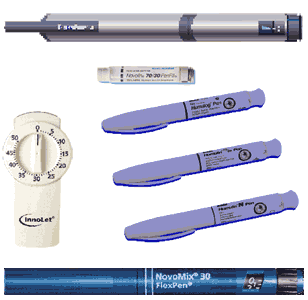
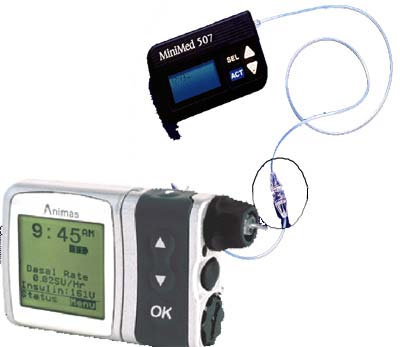
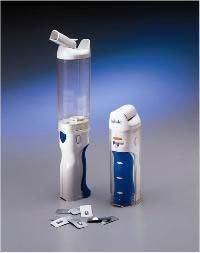
Exubera® is a rapid-acting, fine dry-powdered insulin that enters the bloodstream very rapidly. It is especially indicated for pre-meal insulin administration. Exubera® is dispensed in 1 mg (equivalent to 3 units of regular insulin) and 3 mg (equivalent to 8 units of regular insulin) blister packs.31 Studies have shown that people like using inhaled insulin and feel that it gives them a better quality of life, which may help them accept more intensive insulin treatment. Although inhaled insulin acts rapidly, only a small percentage of the inhaled insulin actually reaches the bloodstream. Large amounts are therefore needed and much is wasted, which explains its relatively high cost. Safety also remains a concern.
In general, studies have found Exubera® to be as safe as other treatments; the most common problems were hypoglycemia, cough and bitter taste. As Exubera® may affect lung function, people using it need to have their lungs tested before starting the medication, and then every 6 to 12 months thereafter. Exubera® is not recommended for people who smoke, recently quit smoking or who have chronic lung disease, such as asthma, chronic obstructive pulmonary disease or emphysema. There are other non-injectable delivery systems currently being investigated.Although inhaled insulin acts rapidly, only a small percentage of the inhaled insulin actually reaches the bloodstream. Large amounts are therefore needed and much is wasted...
Fixed combinations insulins are commercially prepared mixtures of basal and bolus insulins. While they serve a purpose, especially in people who require a simpler and more convenient method of insulin replacement, they can make precise control of blood sugar levels harder to achieve.5 Novolog 70/30, for example, is a fixed combination (70% of protamin aspart suspension and 30% soluble aspart insulin; all recombinant DNA human insulin) that is given twice daily before breakfast and dinner at a prescribed dose without self-adjustment. While simpler to implement, this type of regimen is associated with long-term weight gain and low blood sugar and is often used as a transitional preparation for a more individualized basal bolus regimen; as the name suggests, "fixed combinations" limit individualization and flexibility.
A person with Type 1 diabetes must learn how to manage hypoglycemia not only for immediate safety, but also because fear of hypoglycemia can get in the way of successfully managing blood sugar levels in the long term. Some people with this problem overeat and administer inadequate insulin in order to avoid hypoglycemia. This is not healthy. People with Type 1 diabetes need to master a fine balance between food, exercise and medications.
An important part of self-management is blood glucose monitoring. There are many types of blood glucose monitoring devices; all are fast and accurate when used correctly. Choosing one is based on individual preference and insurance reimbursement. For instance, a meter with a larger display may be better for the elderly or those with visual impairment. The toll-free 800 number on the back of each monitor is useful for trouble shooting. Frequency and timing of testing need to be individualized according to the insulin regimen and any changes in therapy. For instance, a person with Type 1 diabetes who requires 4 injections or more will need to monitor at least 4 to 8 times daily, while a person with Type 2 diabetes requiring basal insulin only may not need to check their blood sugar more often that once or twice daily. Target blood sugar ranges need to be reviewed and written down; record-keeping is a skill that when done properly helps health care providers to interpret insulin effects and make adjustments in treatment, the main reason why frequent monitoring is prescribed.A person with Type 1 diabetes must learn how to manage hypoglycemia not only for immediate safety, but also because fear of hypoglycemia can get in the way of successfully managing blood sugar levels in the long term.
There are two things to remember when carbohydrate counting. First, carbohydrate is the main nutrient that impacts blood sugar (glycemic index), not protein or fat. A large meal of bacon and eggs has minimal carbohydrate content and, therefore, little impact on blood sugar. Second, the blood sugar rise is much more related to the total amount of carbohydrate than to the source of carbohydrate. For example, two slices of bread and six Mini Tootsie Rolls each have the same carbohydrate content; therefore, each raises blood sugar levels about the same amount. Blood sugar control can be achieved regardless of the amount or type of carbohydrate eaten, as long as the proper amount of insulin is taken. The most common carbohydrate counting mistakes are identifying carbohydrate sources incorrectly, estimating portions incorrectly, misreading labels and careless snacking without administering insulin.
Individuals vary considerably in the amount of insulin needed for a fixed amount of carbohydrate. A commonly used method for estimating a person's carbohydrate to insulin ratio (CIR), the amount of carbohydrate that one unit of rapid acting insulin will cover, is to divide 500 by the average number of total daily units of insulin (rapid and long-acting) administered each day.33 Someone taking 30 units of insulin per day would have a CIR of about 1:15 (500 divided by 30 equals 16.6). In other words, 1 unit of rapid-acting insulin is needed for 15 grams of carbohydrate.Target blood sugar ranges need to be reviewed and written down; record-keeping is a skill that when done properly helps health care providers to interpret insulin effects and make adjustments in treatment...
Factors that affect insulin sensitivity can change an individual's CIR. For instance, exercise will improve insulin sensitivity. An individual with a CIR of 15:1 who anticipates eating 2 cups of rice (90 grams of carbohydrate) needs 6 units of rapid acting insulin. Once exercise is discontinued, the individual's sensitivity may decrease and the same 2 cups of rice would now require more insulin. A rise in blood sugar from a meal of more than 50 mg/dl may be a sign of either incorrect carbohydrate counting or an incorrect CIR.
In addition to the insulin dose needed to cover the carbohydrate, a supplemental dose may be required to correct for a high pre-meal blood sugar. This dose is referred to as the correction factor (CF) or the amount that one unit of insulin can be expected to decrease the level of glucose. The CF can be estimated by dividing the total number of units of daily insulin into 1500. An individual with a target pre-meal blood sugar of 100 mg/dl whose CF is 40 (1 unit of rapid acting insulin drops the blood sugar 40 mg/dl) and whose pre-meal CBG is 180 mg/dl, needs an additional 2 units above and beyond the amount of insulin calculated to cover the anticipated amount of carbohydrate.
For those who find advanced carbohydrate counting too difficult, a fixed dose regimen can be provided. This, however, imposes the challenge of consistency in timing and carbohydrate content of meals.
Without detailed blood sugar, food, exercise and insulin-dosing records, it is difficult for health care providers to identify problems and make appropriate changes in treatment. Meaningful and engaged office visits are also very important. The rigor of intensive insulin therapy demands repeated visits to a person's healthcare provider or providers. Intensive insulin therapy also requires multiple visits to a registered dietitian during the first three months totaling 3 to 4 hours, as well as 4 to 6 additional hours of follow-up during the year. Attention to dietary management of lipids, blood pressure and weight require additional visits.
Recently, Medtronic MiniMed has received approval for a new version of the CGMS, the Guardian RT. This system displays real time glucose values every 5 minutes and sounds an alarm or vibrates if glucose levels go too high or to low. The Guardian RT is approved for people 18 years of age or older who have Type 1 or Type 2 diabetes. By obtaining frequent glucose values, individuals can more readily see the effect of diet, exercise and medications and make the needed changes that will result in fewer glucose excursions. In this case, CGMS may help to assess the effectiveness of basal and bolus insulins.
The pre-meal bolus insulin amount can be automatically calculated by programming the pump with pertinent numbers including the individual's carbohydrate to insulin ratio, correction factor, glycemic targets and duration of insulin action. The user enters the anticipated carbohydrate amount and blood sugar. The calculation takes into account the active insulin on board, subtracting this insulin from the estimated correction dose. Pumps also feature bolus delivery over an extended period to match prolonged digestion and absorption of food. For example, a high fat meal treated with an injection of rapid-acting insulin often results in an initial hypoglycemic response followed by hyperglycemia when the food finally is finally absorbed.
Studies comparing MDI to CSII have found that in general they produce comparable A1C values, though people on CSII report less hypoglycemia and better quality of life. Some disadvantages of the insulin pump are the higher cost for the pump and its supplies, increased skin infections and greater chance of mechanical problems such as interruption of insulin flow or pump failure that can lead to diabetic ketoacidosis (DKA). An early malfunction that is not recognized can lead to DKA within 4 to 6 hours. Therefore, it is imperative for anyone using an insulin pump to test their blood glucose levels frequently (no fewer then 4-6 times each day), be properly trained in the use of the pump, and learn how to recognize and treat acute complications.
It is important that those who choose the pump as a delivery system clearly understand that the convenience of no injections is offset by many other responsibilities and that the pump is a delivery system that is only as effective as its user. A surgically-implanted programmable insulin pump, which delivers insulin directly into the body, is under investigation. At this time, technical problems have been a barrier to approval.
Recently, the FDA has approved an injectable non-insulin medication amylin analogue, and a non-injectable inhaled insulin. The wide choice of new medications and gadgetry include pen syringes, insulin pumps, and better systems for monitoring, all of which have made the management of Type 1 diabetes easier. These advances have improved insulin administration and adherence, reduced episodes of hypoglycemia and fostered a better quality of life for those with Type 1 diabetes, but they have only had a modest impact on overall control of blood sugar levels.
The Continuous Glucose Monitoring Sensor (CGMS) is slowly evolving into a closed loop system where glucose sensors will provide feedback to implantable insulin pumps so as to deliver insulin more precisely. It must always be remembered, however, that successful outcomes require effective team management by health care providers, along with an individual who is educated and motivated enough to assist in the management of their own disease.